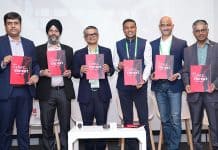
As enterprises across the globe navigate a rapidly evolving threat landscape, identity security has become a critical priority. CyberArk, a global leader in identity security, is redefining how organizations protect both human and machine identities—particularly in an era dominated by AI, automation, and hybrid IT environments.
From Human to Machine Identities
According to Rohan Vaidya, Area Vice President for India and SAARC at CyberArk, the identity and access management (IAM) space has evolved significantly over the years. “Initially, identity management focused on human users—the assumption being that humans were the weakest link,” he explains. Over time, as organizations adopted cloud, automation, and AI tools, machine identities—such as bots, scripts, and AI agents—became equally critical.
“For one human employee, enterprises now manage 84 to 85 machine identities,” Vaidya notes. “These machine identities must be protected, and their access securely managed, rotated, and stored. It’s impossible to do manually, which is why tools for discovery, rotation, and compliance are essential.”
CyberArk has extended its focus beyond traditional IAM to include certificate management, ensuring seamless business continuity and protecting interconnections in complex IT environments. “Certificates are becoming a key identity component,” Vaidya adds. “By 2029, many certificates will last only 47 days, which makes automated management critical.”
India: A Fast-Adopting, Innovative Market
India’s rapid digital adoption, accelerated by COVID-19 and the rise of remote work, has positioned the country as a key market for CyberArk. Vaidya highlights India’s early adoption of cloud infrastructure, mobile banking, UPI, and online transactions, which necessitated robust identity and access management solutions.
“India is technologically advanced, with professionals who are curious and innovative,” he says. “Many use cases tested here eventually inform CyberArk’s global product enhancements. India’s market is not just a consumer but also a contributor to our global strategy.”
Zero Trust in Practice
Zero Trust continues to dominate enterprise security discussions, and CyberArk is at the forefront of enabling its implementation. “Zero Trust is fundamentally about continuous validation,” Vaidya explains. CyberArk provides adaptive authentication, multi-factor authentication (MFA), and privileged access monitoring, ensuring anomalies—like logins from unusual locations—are detected and mitigated in real time.
AI Integration and the Future of Identity
Artificial intelligence is reshaping both threats and defense mechanisms. CyberArk leverages AI in multiple ways: operationally, through its CORA AI tool that streamlines onboarding and policy management; within products, to accelerate data correlation and analytics; and proactively, to secure AI agents deployed within enterprises.
“Agentic AI introduces autonomous decision-making, which raises new identity security concerns,” Vaidya notes. “We’re focused on protecting AI agents to prevent manipulation, bias, or unauthorized actions—essentially extending identity management to the AI realm.”
CyberArk India is also focusing on certificate management as an emerging domain in identity security. Vaidya sees certificates—API keys, SSH keys, and secrets—as integral identities in the interconnected digital ecosystem. “This is an area to watch,” he says, “as enterprises increasingly adopt automated solutions to manage and secure these identities.”
From human users to machine identities and AI agents, CyberArk’s approach underscores the evolving nature of identity security. With India as a strategic market, the company continues to drive innovation, educate enterprises, and enable organizations to implement Zero Trust securely. As AI and automation accelerate, CyberArk is preparing enterprises to safeguard every identity in the digital ecosystem—today and in the future.