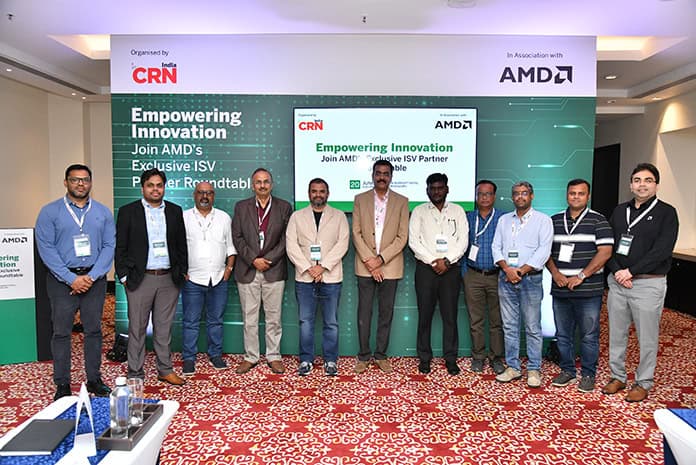
CRN India and AMD recently hosted a Partner Strategy Roundtable, bringing together leaders from across the tech industry. The aim was to explore how closer collaboration between vendors, system integrators, and software providers can help India move from selling products to delivering complete solutions.
Today, partners are no longer just selling software or hardware—they are helping customers solve problems. The focus is shifting to co-creating solutions that are built into proposals, combined with hardware, software and services, and designed to meet specific customer needs. This approach creates more value for everyone involved—from SIs to software vendors (ISVs). In price-sensitive markets like India, gaining trust and building relationships is key. The conversation stressed that customers aren’t only looking for good pricing—they want solutions that perform well, scale easily, and last longer. Simply selling hardware isn’t enough anymore.
The roundtable highlighted the importance of an ecosystem approach. Whether it’s rolling out 5G or automating factories, hardware, software, and systems must work smoothly together. Strong partnerships help make this possible. For industries still using old systems, the message was clear: they don’t just need new technology—they need support, training, and guidance. That’s where collaboration between vendors and partners becomes truly valuable.
In a focused session, AMD shared how its technology can help build stronger, locally developed solutions in India’s industrial sectors. Many integration projects in India are still led by global ISVs and SIs. The discussion pointed out the need to bring more opportunities to Indian system integrators, helping them build local expertise and deliver solutions at scale. This is vital for retaining knowledge and driving innovation within the country.
Industries like steel and oil refining still rely heavily on imported tech. By combining AMD hardware with software from local ISVs and engineering support teams, companies can lower costs and create more relevant, reliable solutions for the Indian market. AMD’s EPYC processors, with their advanced architecture, offer excellent performance at a competitive price. When these are paired with tools like Ansys, Cadence, or Fluent—and delivered by local partners—they provide a powerful and cost-effective alternative to older systems.
The session ended with a clear plan: build a strong network of Indian ISVs and system integrators who can deliver complete, ready-to-use solutions. There was also strong support for AMD’s ongoing training efforts, workshops, and university programmes, which help drive early innovation and speed up product development.
India’s path to becoming more self-reliant in technology will take more than just powerful hardware. It will require trusted partnerships, local capability-building, and long-term collaboration. With its ecosystem-first approach, AMD is helping to lead the way.